

Selecting the right eLearning tool requires aligning training goals, ensuring security compliance, and leveraging robust analytics. CS Designs and Marketing helps Fresno and Central Valley businesses navigate these critical factors. This guide covers the essential criteria for evaluating digital training platforms to maximize your investment. For additional details, review the csdesigns net.
Training Goals Alignment
Defining Measurable Objectives
Content Relevance and Industry Fit
Employee Engagement Strategies
Security and Compliance
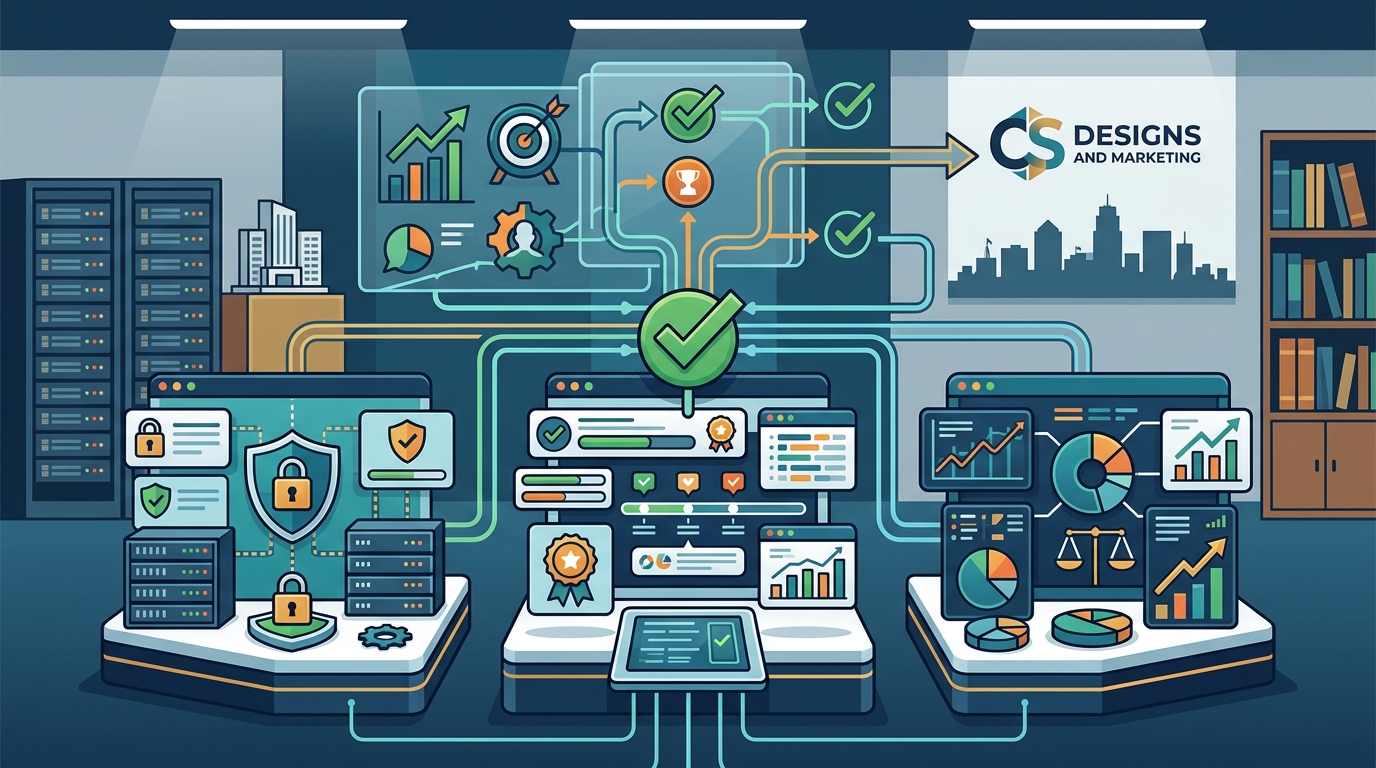
Security and compliance is the framework of protocols that protects sensitive employee data and ensures adherence to regulatory standards. In today's digital landscape, data breaches can have severe financial and reputational consequences. Your eLearning tool must prioritize data protection and regulatory compliance. For additional details, review the .
Data Protection Standards
Regulatory Compliance
Many industries are subject to specific regulations regarding employee training. For example, OSHA requires certain safety training for workplace environments. The platform should offer courses that are certified by recognized bodies. Our OSHA Outreach courses are provided in partnership with UL Solutions Pure Safety, an OSHA-authorized online Outreach provider. This ensures that your training meets federal standards and provides valid certification for your employees.
Access Control and Permissions
Role-based access control is essential for managing who can view and complete specific training modules. Administrators should be able to assign courses to specific departments or individuals. This ensures that employees only access the training relevant to their roles, enhancing both security and efficiency. For additional details, review the Customer Experience.
Analytics and Reporting
Tracking Progress and Completion
Measuring Business Impact
The ultimate goal of training is to improve business performance. Advanced analytics should correlate training completion with business metrics. For example, you can track whether employees who complete safety training have fewer accidents. This data helps justify the investment in training and demonstrates its value to stakeholders. For additional details, review the Frequently Asked Questions.
Customizable Reports
Every business has unique reporting needs. The platform should allow you to create custom reports that focus on the metrics that matter most to you. Whether you need to report on compliance for auditors or track skill development for HR, the reporting tools should be flexible and easy to use.
Platform Comparison
| Content Library | Relevance and depth of training material | Industry-specific courses, video formats, updated content |
| Security | Protection of sensitive employee data | Encryption, SOC 2 compliance, data retention policies |
| Compliance | Adherence to regulatory standards | OSHA, IACET, or other industry certifications |
| Analytics | Measuring training effectiveness | Real-time dashboards, customizable reports, export options |
| User Experience | Employee engagement and ease of use | Mobile compatibility, intuitive interface, interactive elements |
Key Takeaways
- Align training goals with specific, measurable business objectives.
- Prioritize data security and regulatory compliance to protect your business.
- Look for robust analytics to track progress and measure business impact.
- Choose a platform with a user-friendly interface to maximize employee engagement.
- Verify certifications from recognized bodies like OSHA or IACET.
- Consider the total cost of ownership, including implementation and support.
- Partner with a local expert like CS Designs and Marketing for tailored solutions.
Frequently Asked Questions
What is the most important factor when choosing an eLearning tool?
Alignment with your specific training goals is the most critical factor. The tool must support the outcomes you want to achieve, whether that is safety, skill development, or compliance.
How do I ensure my eLearning platform is secure?
Look for providers that use encryption, comply with SOC 2 or ISO 27001 standards, and have clear data retention policies. Ask about their security protocols during the evaluation process.
Can eLearning replace in-person training?
eLearning can complement or replace in-person training for many topics. It offers flexibility and scalability, but some skills may still require hands-on practice. A blended approach is often most effective.
What certifications should I look for in an eLearning provider?
Look for certifications from recognized bodies such as OSHA, IACET, or industry-specific organizations. These ensure that the training meets established standards and provides valid credentials for your employees.
How can I measure the ROI of my eLearning program?
Use analytics to track completion rates, engagement, and business metrics. Correlate training data with performance indicators such as accident rates, productivity, or customer satisfaction to demonstrate ROI.
Is mobile compatibility important for eLearning?
Yes, mobile compatibility is essential for modern workforces. Employees should be able to access training on their smartphones or tablets, allowing them to learn on their own schedule and in various environments.
Conclusion
Choosing the right eLearning tool is a strategic decision that impacts your workforce's development and your business's bottom line. By focusing on training goals alignment, security and compliance, and analytics and reporting, you can select a platform that delivers measurable results. CS Designs and Marketing is committed to helping Central Valley businesses implement effective digital training solutions. To discuss your specific needs, for a consultation.