

Programmatic video ads and voice chatbots are distinct tools that serve different business goals. Video ads drive top-of-funnel awareness, while voice chatbots handle immediate customer service and lead qualification. For a small business, the right choice depends on whether you need to attract new customers or retain existing ones. This guide explains how to evaluate both technologies, verify vendor claims, and determine which solution aligns with your specific growth objectives. according to Small Business Data For additional details, review the .
How to Choose: Separating Good from Bad
Choosing between programmatic video and voice chatbots requires understanding their core functions. Programmatic video advertising is the automated buying of video ad inventory across digital platforms. It is a broadcast tool designed to reach a wide audience with visual storytelling. Voice chatbots are conversational AI interfaces that use natural language processing to interact with users in real-time. They are a retention and service tool designed to handle specific queries and qualify leads.
A good implementation of either technology is defined by its integration with your existing business workflow. If a video ad campaign does not drive traffic to a landing page that captures data, it is a vanity metric. If a chatbot cannot transfer a call to a human agent when the conversation becomes complex, it creates customer friction. The best option is the one that solves a specific bottleneck in your sales funnel. For businesses needing brand awareness in a new market, video is often the primary driver. For businesses with high call volumes and repetitive questions, chatbots provide immediate ROI. according to Why Do SMEs
What to Ask: Pre-Commitment Questions
Before committing to a vendor, you must ask specific questions that reveal the depth of their expertise. For video ads, ask about the targeting capabilities. Can they segment audiences by geography, interest, and behavior? For chatbots, ask about the fallback mechanism. What happens when the bot does not understand a request? A robust system should seamlessly hand off to a human or provide a clear error message.
Integration and Data Ownership
You must also ask about data ownership. Who owns the customer data collected by the chatbot or the viewer data from the video ads? Ensure that you have full access to this data for future use. Ask how the technology integrates with your current Customer Relationship Management (CRM) system. If the vendor cannot provide a clear integration path, the technology will likely become an isolated silo that fails to support your broader business goals.
How to Verify: Checking Claims and Credentials
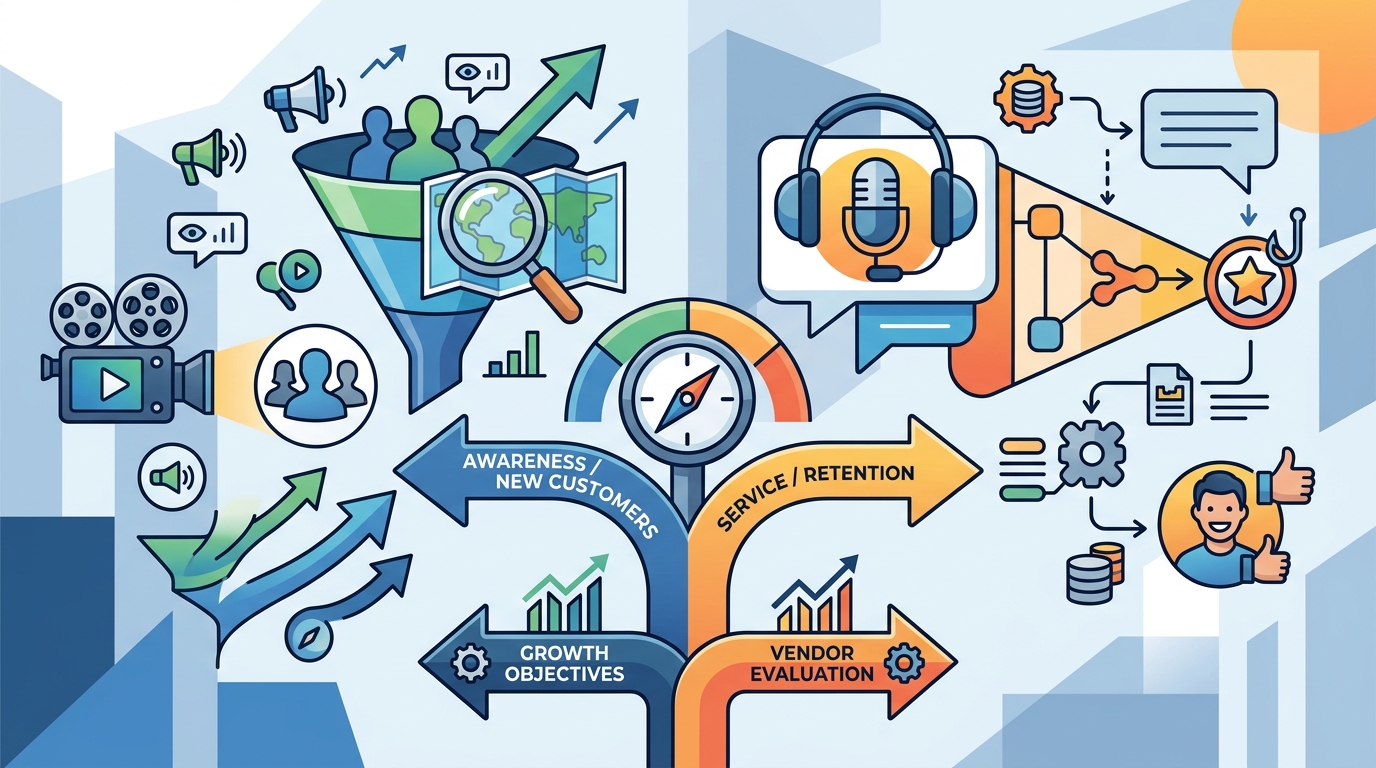
Credential Verification
Verify the technical credentials of the development team. If a vendor claims to use advanced machine learning, ask for details on the model architecture. Check for third-party certifications or partnerships with major ad platforms. These credentials provide a baseline of trust. If a vendor refuses to provide proof of their technical capabilities, consider that a significant red flag.
How It Works: Process and Timeline
Understanding the implementation process helps you set realistic expectations. Programmatic video campaigns typically require a setup phase of two to four weeks. This includes creative production, audience definition, and platform configuration. Once live, the campaign runs continuously, with optimization occurring weekly. Voice chatbot development is a longer process. It involves mapping out conversation flows, training the AI on your specific business data, and rigorous testing. This phase can take four to eight weeks.
The order of operations is critical. For video, you must have your landing page optimized before the ads go live. For chatbots, you must have your knowledge base documented before the AI can be trained. Skipping these preparatory steps leads to poor performance and wasted budget. The timeline is not just about technology; it is about aligning your internal processes with the new digital capabilities.
What It Costs: Price Drivers
Cost structures for these technologies differ significantly. Programmatic video advertising is typically performance-based. You pay for impressions, clicks, or views. The cost is driven by the competitive landscape of your industry and the specificity of your targeting. Voice chatbots are often priced as a monthly subscription or a one-time development fee plus maintenance. The price is driven by the complexity of the conversation flows and the volume of interactions expected.
Budget Allocation
What Goes Wrong: Common Mistakes
Many small businesses make critical errors when adopting these technologies. The most common mistake with video ads is ignoring the post-click experience. If the ad promises one thing but the landing page delivers another, users will bounce. This mismatch wastes ad spend and damages brand trust. With chatbots, the most common mistake is over-reliance. If the bot is not properly monitored, it can provide incorrect information, leading to customer dissatisfaction.
Monitoring and Optimization
Another frequent error is the lack of ongoing optimization. Both video ads and chatbots require continuous tuning. Video ads need creative refreshes to combat audience fatigue. Chatbots need regular updates to their knowledge base to reflect changes in products or policies. Without a dedicated team or a reliable agency partner, these technologies will degrade in performance over time. Proactive monitoring is essential for long-term success.
Versus Alternatives: Comparative Analysis
To make an informed decision, compare these technologies against other marketing channels. The table below summarizes the key differences between programmatic video, voice chatbots, and traditional search engine optimization.
| Feature | Programmatic Video | Voice Chatbots | SEO |
|---|---|---|---|
| Primary Goal | Awareness and Reach | Service and Qualification | Organic Traffic |
| Time to Results | Immediate | Medium (4-8 weeks) | Long (6-12 months) |
| Cost Structure | Performance-based | Subscription or Development | Content and Technical |
| Best For | New Market Entry | High Call Volume | Long-Term Growth |
For a Specific Situation: Case-Based Advice
The right choice depends on your specific business scenario. Consider a local service business in the Central Valley that is experiencing high call volumes but has a small marketing budget. In this case, a voice chatbot is likely the better fit. It can handle routine inquiries, schedule appointments, and qualify leads without requiring a large ad spend. The immediate reduction in missed calls provides a clear return on investment. according to Small Business U
Conversely, consider a e-commerce brand that is established locally but wants to expand into new regions. In this scenario, programmatic video ads are the superior choice. They allow the brand to reach a broad audience in new geographic areas quickly. The visual nature of video is particularly effective for showcasing products. The key is to match the technology to the specific growth challenge you are facing.
Rules and Protections: Compliance and Rights
Both technologies are subject to regulatory frameworks. Programmatic video advertising must comply with data privacy laws such as the California Consumer Privacy Act (CCPA). You must ensure that your ad platform is transparent about how user data is collected and used. Voice chatbots must also adhere to these regulations. If the bot collects personal information, you must provide a clear privacy policy and obtain consent where required.
Consumer Rights
Local Specifics: Central Valley Context
Local businesses in the Central Valley face unique challenges and opportunities. The region has a diverse demographic and a strong local culture. Programmatic video ads can be targeted specifically to Fresno and Clovis, allowing you to reach your local audience with precision. This geographic targeting is a significant advantage over national campaigns. Voice chatbots can be customized to reflect local dialects and cultural nuances, improving user engagement.
Local competition is often less sophisticated in its use of digital technology. By adopting these tools, you can gain a competitive edge. CS Designs and Marketing specializes in helping Central Valley businesses leverage local data to optimize their digital presence. Understanding the local market is essential for maximizing the impact of your digital investments. according to Small Business Data
Timing: When to Act
Timing is a critical factor in the success of your digital strategy. For video ads, timing is often driven by seasonal demand. If your business has peak seasons, launch your campaigns a few weeks before the peak to build awareness. For chatbots, timing is driven by operational readiness. Implement the bot when your team is prepared to handle the overflow of qualified leads. If you implement a chatbot before your team is ready, you may experience a bottleneck in lead conversion.
Market conditions also influence timing. If your competitors are not yet using these technologies, you have a window of opportunity to establish dominance. As adoption increases, the cost of attention will rise. Acting early allows you to secure a lower cost per acquisition and build a data advantage. Monitor your industry trends to identify the optimal time for implementation.
Results Over Time: Long-Term Outcomes
The long-term outcomes of these technologies depend on consistent optimization. Programmatic video campaigns can build significant brand equity over time. As you accumulate data on your audience, you can refine your targeting and creative to improve performance. Voice chatbots become more accurate and useful as they learn from user interactions. Over time, they can handle a larger percentage of customer inquiries, freeing up your human staff for more complex tasks.
Measurable outcomes include increased website traffic, higher conversion rates, and improved customer satisfaction scores. Track these metrics regularly to assess the effectiveness of your strategy. A long-term perspective is essential. These technologies are not quick fixes; they are foundational components of a modern digital marketing strategy. Consistent investment and optimization yield compounding returns over time.
Key Takeaways
- Programmatic video ads are best for awareness and reaching new audiences.
- Voice chatbots are best for customer service and lead qualification.
- Verify vendor claims by requesting specific case studies and testing the technology.
- Cost structures differ: video is performance-based, chatbots are subscription-based.
- Compliance with data privacy laws is mandatory for both technologies.
- Long-term success requires consistent optimization and monitoring.
Frequently Asked Questions
What is the main difference between programmatic video and voice chatbots?
Programmatic video is a broadcast tool for awareness, while voice chatbots are a conversational tool for service and qualification.
How long does it take to implement a voice chatbot?
Implementation typically takes four to eight weeks, depending on the complexity of the conversation flows.
Are programmatic video ads suitable for small businesses?
Yes, they are suitable if the goal is to reach a broad audience or enter a new market. They require a performance-based budget.
How do I verify if a chatbot vendor is legitimate?
Test the bot yourself, ask for case studies with specific metrics, and verify their technical credentials.
What are the compliance requirements for these technologies?
You must comply with data privacy laws such as the CCPA, ensuring transparency and user consent for data collection.
Can I use both video ads and chatbots together?
Yes, a hybrid strategy is often effective. Video drives traffic, and chatbots handle the resulting inquiries.
How does local targeting work for video ads?
Programmatic platforms allow you to target specific geographic areas, such as Fresno and Clovis, to reach local audiences.