
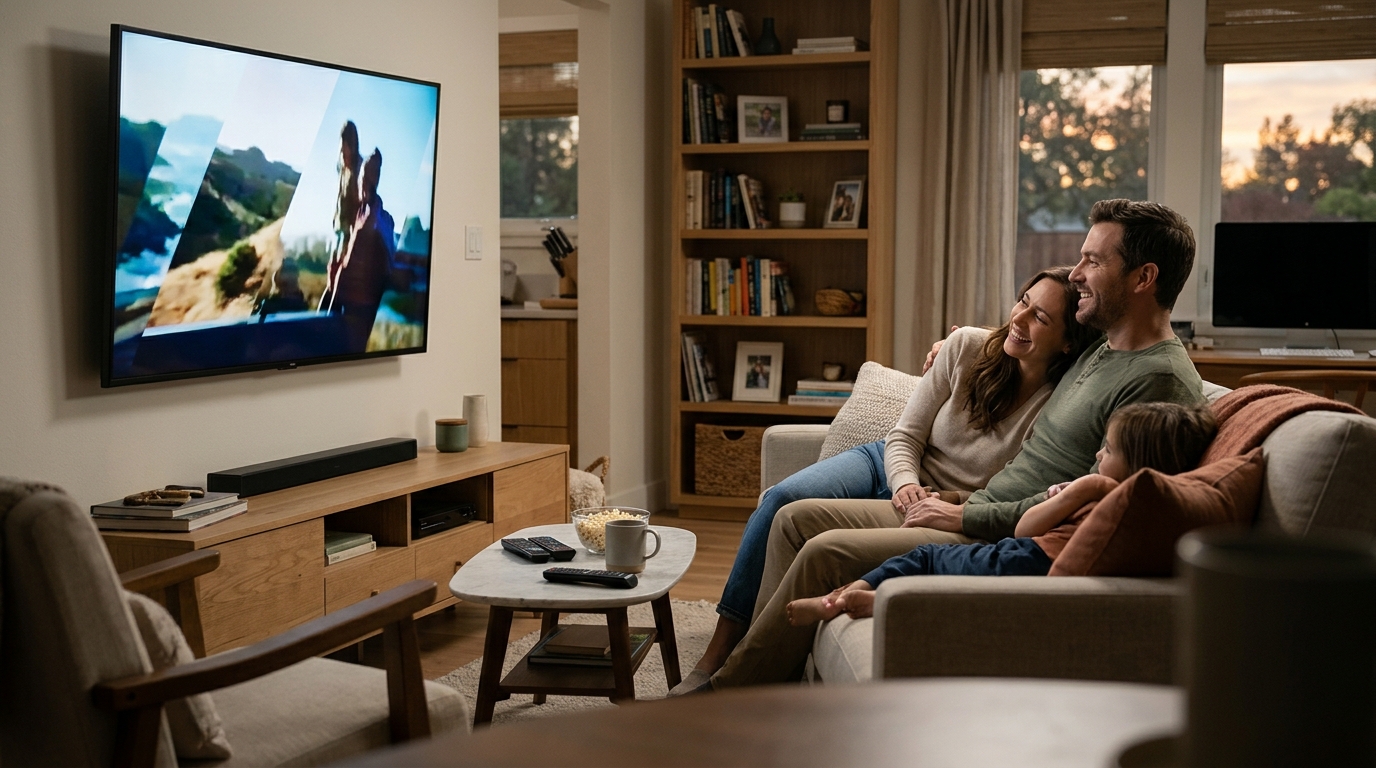
Connected TV Rates
Connected TV (CTV) advertising is the practice of buying video ad inventory on streaming devices like smart TVs and streaming sticks. In the Fresno market, CTV rates are highly competitive due to the high density of streaming households. The cost is typically measured in Cost Per Mille (CPM), which is the price paid for every 1,000 ad impressions.
Standard CPM Pricing Tiers
It is important to distinguish between raw inventory costs and managed campaign costs. The raw CPM is the base cost, but the total cost of ownership includes production, targeting, and management. When evaluating a quote, you must look at the all-in cost per impression to understand the true expense of reaching a viewer in the Central Valley.
Impact of Targeting on Cost
Screen Size and Placement
The physical screen size also affects pricing. Large-screen TV placements typically command a higher CPM than small-screen placements on laptops or phones. Many programmatic deals offer a mix, such as 90% large screen and 10% small screen. This blended approach allows advertisers to maintain a lower average CPM while still securing the premium attention of the living room TV. Understanding this blend is crucial for budgeting accurately. For additional details, review the 429 Too Many Requests.

Minimum Monthly Budgets
Minimum monthly budgets are the lowest amount of money an advertiser must commit to run a programmatic video campaign. These minimums exist because ad exchanges and platforms require a certain volume of impressions to make the campaign statistically significant and operationally viable. For local businesses in Fresno, understanding these thresholds is critical for planning. For additional details, review the 429 Too Many Requests.
Platform and Agency Minimums
Agencies may have different minimums depending on the level of service provided. A full-service agency that handles production, strategy, and management will have a higher minimum than a self-serve platform. For instance, a campaign that includes custom video production and ongoing optimization will require a larger budget to justify the labor costs involved.
Scaling and Frequency Cap
Production Costs vs. Media Spend
Key Takeaways
- Targeting specificity increases CPM costs but improves audience relevance.
- Blended screen sizes (large and small) can help lower the average CPM.
- Production costs are separate from media spend and must be budgeted separately.
- Frequency capping requires a sufficient budget to reach the target audience multiple times.
- Local agencies can negotiate better rates through ad exchange partnerships.
- Statistical significance requires a minimum volume of impressions for optimization.
Frequently Asked Questions
What is the average CPM for CTV in Fresno?
Do I need a large budget to start programmatic video?
How does targeting affect my cost per impression?
Narrower targeting increases the CPM. Broad targeting lowers the CPM but may reach less relevant audiences.
Is production cost included in the media budget?
Usually, no. Production is a separate line item. Always ask for an all-in cost quote to avoid surprises.
What is the difference between CTV and OTT?
CTV refers to ads on smart TVs, while OTT refers to ads on streaming apps. CTV is a subset of OTT.
How long does it take to see results from programmatic video?
Initial data appears within days, but meaningful optimization and results typically take 4 to 8 weeks.
Conclusion
Understanding the cost of programmatic video advertising in Fresno is essential for any business looking to expand its digital reach. By knowing the typical CPM ranges and minimum budget requirements, you can plan a campaign that fits your financial goals while maximizing impact. CS Designs and Marketing provides the expertise needed to navigate these costs effectively, ensuring your investment delivers measurable results. today to discuss your specific needs and receive a tailored quote for your Central Valley audience.